
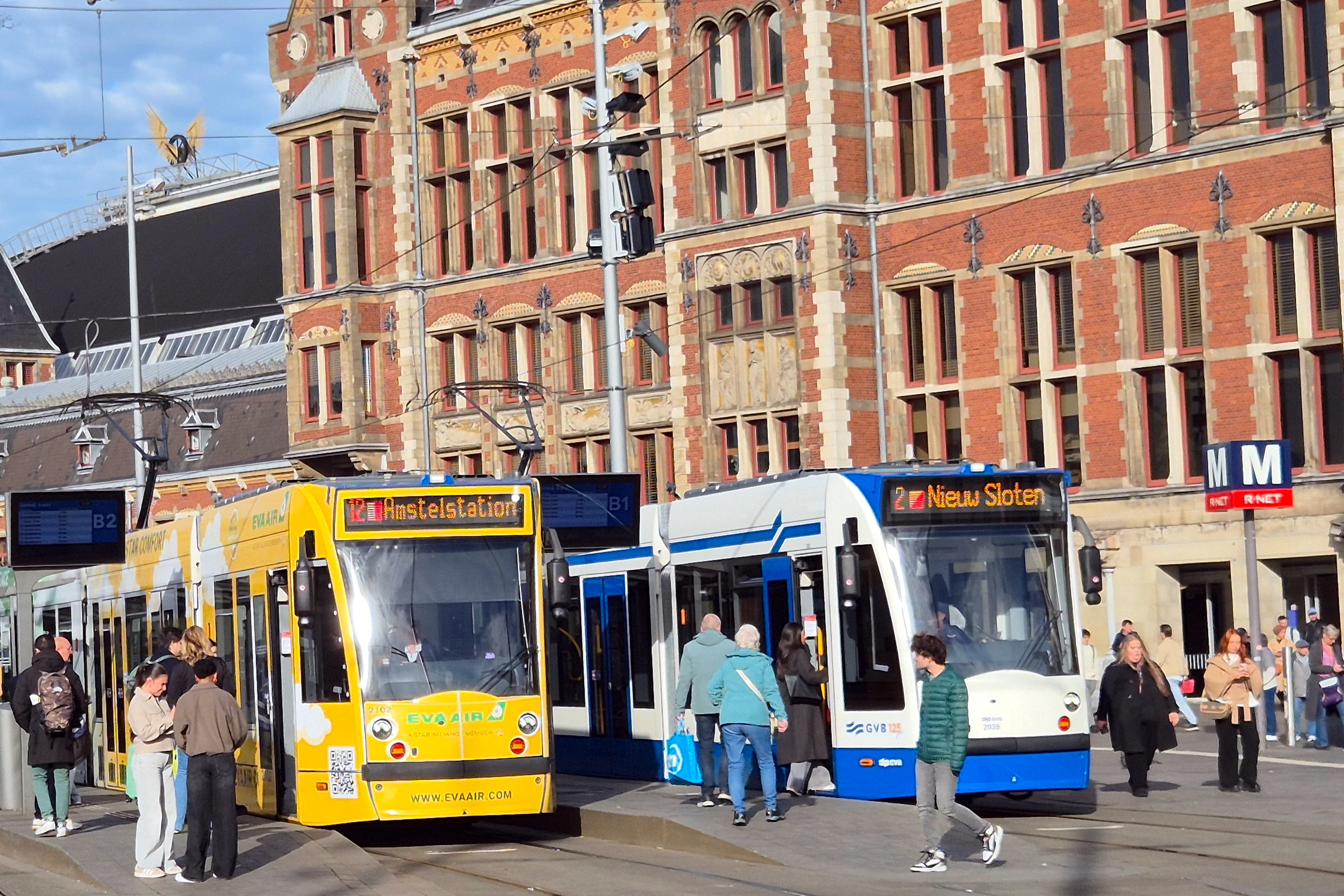
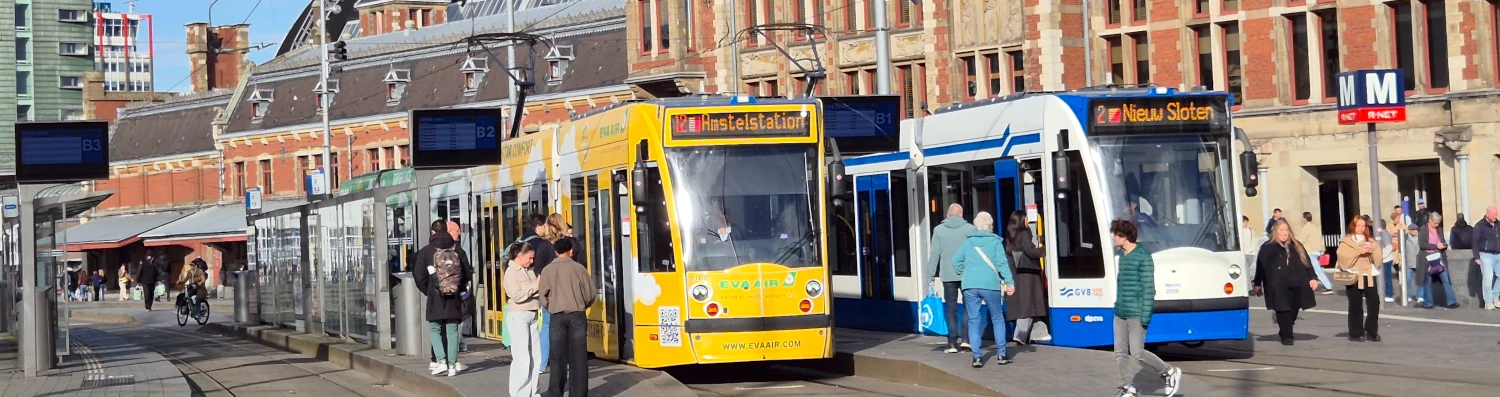
The tram in Amsterdam:
info, tickets, route plan & tips for passengers
The trams in Amsterdam offer visitors an efficient and affordable way to get around the city. Many major attractions can be reached directly by tram.
In this travel guide you will find:
- practical tips for using the tram
- an overview of tickets and the route network – prices updated for 2026
- help with choosing the right ticket to save time and money
This allows you to save both time and money and enjoy your city trip in a relaxed way.

The tram network in Amsterdam is well developed. Trams also run through the narrow streets of the historic city centre along the canals and are therefore used by many visitors to explore the city.
Tickets for the public transport system in Amsterdam:
Which ticket option is best for me?
Whether single ride via e-purse, also referred to as OV-card, all-day ticket, “I Amsterdam Card”, or “Amsterdam Travel Card”, you will find detailed information for all, as well as current fares here.
It allows you to quickly and easily find the right ticket option for your stay in Amsterdam. Researching all options upfront and knowing which ticket option works best for you, will save you money and time after arrival and prevent stressful situations.
Our advice – when you don’t want to deal with the tariff system and ticket machines:
Compared to the Metro, the tram in Amsterdam has a much denser network of lines and stops. The tram is operated by the municipal transport company GVB, which also organizes Metro, city buses, and ferries.
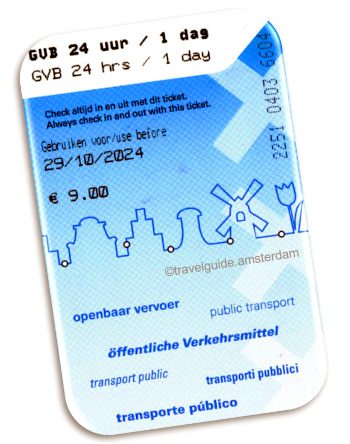
The single-day or multi-day tickets that are available for the public transport system in Amsterdam are typically the best choices for visitors.
- These tickets allow unlimited use of the Metro (subway), GVB bus system, trams, as well as ferries for the entire period of validity (1 – 7 days).
- These tickets are rather inexpensive for a European metropolitan city. For 2026 fares range between €6.15 and €10 a day, depending on period of validity.
- As you can hop on and off the tram as often as you like with this pass, it is well suited for sightseeing trips.
Our tip:
You can purchase these tickets online before your trip without additional fees. You will not have to deal with ticket machines or the tariff system upon your arrival.
That saves time and nerves – after all, you will have better things to do in Amsterdam…
👉 Link: Buy GVB day ticket online (English-language website – authorized GVB ticket seller)
The tram network: lines and network map
The tram network has been expanding since 1875 and nowadays encompasses 15 lines and approximately 200 km of rail lines.
⬇️Download: map – tram lines in Amsterdam / route network plan (as of 2025 / 2026)
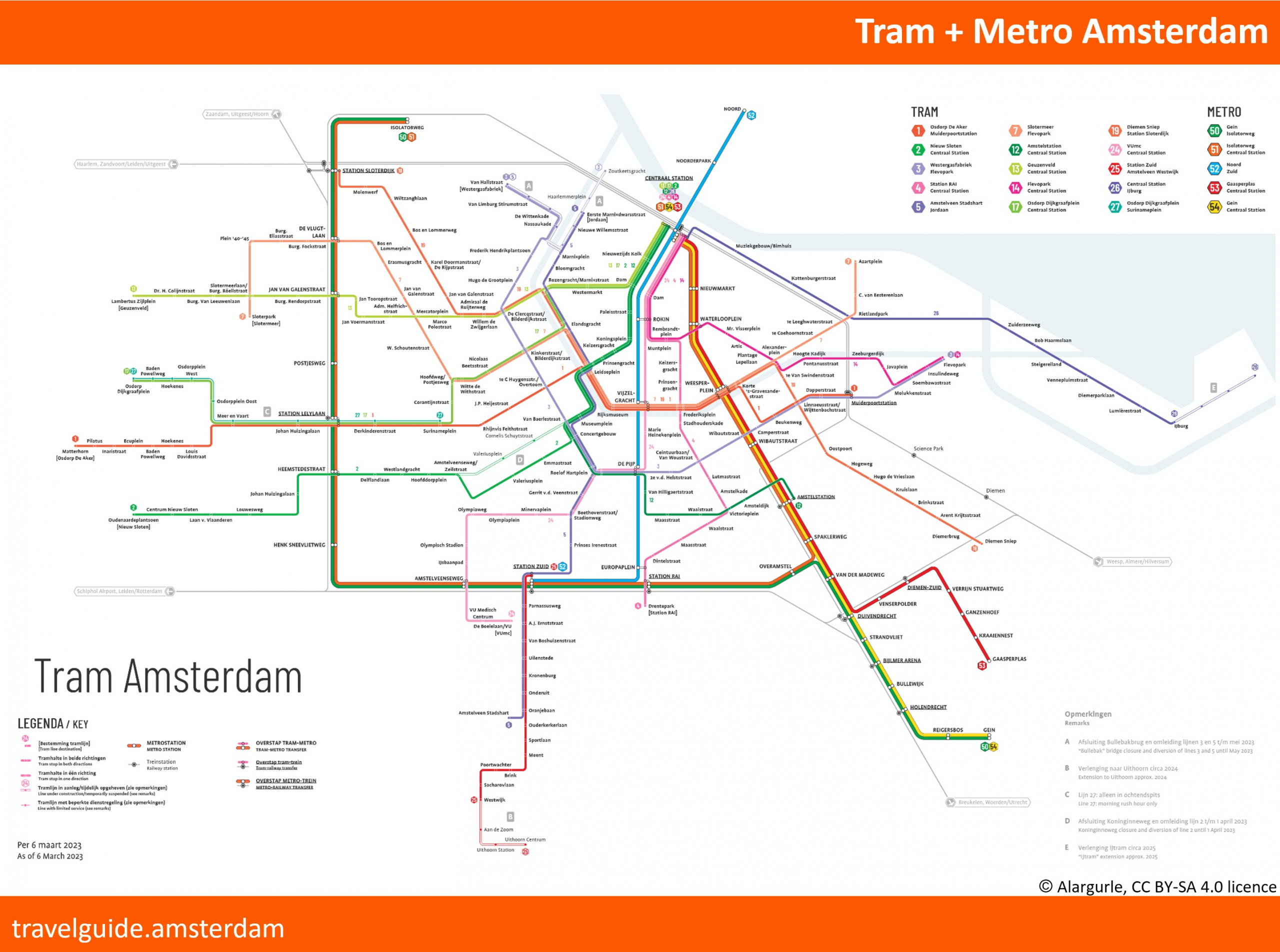
Tram lines in Amsterdam – overview:
| line | from – to | important stops |
| 1 | Muiderpoortstation – Osdorp De Aker (Matterhorn) | Weesperplein, Leidseplein, Surinameplein, Station Lelylaan |
| 2 | Centraal Station – Nieuw Sloten (Oudenaardeplantsoen) | Leidsestraat, Museumplein, Hoofddorpplein |
| 3 | Zoutkeetsgracht – Flevopark | Museumplein, Ceintuurbaan, Muiderpoortstation |
| 4 | Centraal Station – Station RAI (Drentepark) | Utrechtsestraat, Frederiksplein |
| 5 | Westergasfabriek (Van Hallstraat) – Stadshart Amstelveen | Leidseplein, Museumplein, Station Zuid |
| 7 | Slotermeer (Sloterpark) – Azartplein | Mercatorplein, Leidseplein, Weesperplein, Rietlandpark |
| 12 | Centraal Station (Hauptbahnhof) – Amstelstation | Leidsestraat, Museumplein, Ceintuurbaan, Churchill-laan |
| 13 | Centraal Station – Geuzenveld (Lambertus Zijlplein) | Rozengracht, Mercatorplein |
| 14 | Centraal Station – Flevopark | Dam, Plantage, Borneostraat |
| 17 | Centraal Station – Osdorp Dijkgraafplein | Rozengracht, Kinkerstraat, Station Lelylaan |
| 19 | Station Sloterdijk – Diemen Sniep | Admiraal de Ruijterweg, Leidseplein, Weesperplein, Watergraafsmeer |
| 24 | Centraal Station – VU medisch centrum (De Boelelaan/VU) | Central Station – Vijzelstraat – Ferdinand Bolstraat – Stadionweg – Amstelveenseweg – VUmc – De Boelelaan/VU |
| 25 | Station Zuid – Amstelveen Westwijk | Buitenveldertselaan, Beneluxbaan |
| 26 | Centraal Station – IJburg (Pampuslaan) | Passagiersterminal, Rietlandpark, Piet Heintunnel |
| 27 | Surinameplein – Osdorp Dijkgraafplein | Station Lelylaan |
Tips for passengers & sightseeing by tram
- Buy tickets:
Tickets can no longer be bought with cash on the tram. You will find more info here: “Which ticket option is best for me?”.
It is worth it to research tickets for mass transit ahead of time. That saves time and money later. - Sightseeing tip:
Tram line 2 is popular with visitors to the city for sightseeing, as many of the sights are close to the stops.
This line will get you to the flower market, Royal Palace on the dam, Rijksmuseum, Van Gogh museum, Stedelijk museum for example and passing through all the canals of Amsterdam’s famous Canal Belt.

There are many sights along tram line 2. For visitors, the tram is the ideal means of transport in the city centre, as you can explore the city in comfort. With a day ticket, you don’t have to pay extra for each journey and can hop on and off as you please.
- Getting on and off: You may only enter the tram at the front door by the driver or at the double doors at the back. The other doors are for exit only. After entering the tram, you have to validate your ticket on the checking device. A valid ticket is also required to exit.

Only the doors with the “Welkom” sticker are for entry.
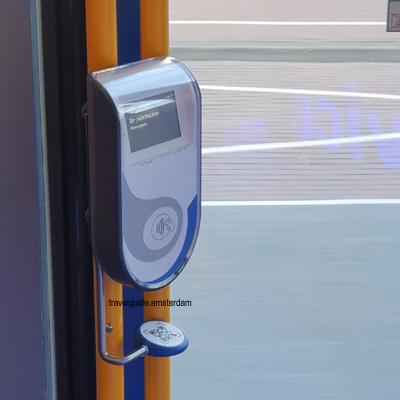
After boarding, you must present your ticket here. The validity is checked (Image: travelguide.amsterdam)
- Panoramic rides:
The tram is very popular with tourists. In contrast to the underground metro, you can also discover the city during the journey. Thanks to the dense network of lines, many sightseeing highlights and museums can be reached by streetcar.
For example, the blue and white trams are a good way to get from the Central Station (Centraal Station) to the city centre and the districts of Amsterdam.
Transfer options between tram, metro and railway
There are currently direct transfer options between the metro and the tram at a total of 17 stations. These interchange points make changing between different modes of transport easy and ensure good connectivity throughout the entire city of Amsterdam.
Metro Line 51
A large share of the transfer connections is provided by Metro Line 51. This line runs as a semi-circular route and intersects numerous tram lines along major traffic corridors, making it a key link between the metro and tram networks.
Connections to the national rail network
At selected stations, passengers can also transfer from the metro or tram to the national railway network. This is particularly convenient for journeys to the surrounding region as well as for longer trips within the Netherlands.
Network map overview
The official network map clearly shows the metro lines and the corresponding tram transfer stations. This makes it easy to plan routes and transfers in advance.
⬇️Download: map – tram lines in Amsterdam / route network plan (as of 2025 / 2026)
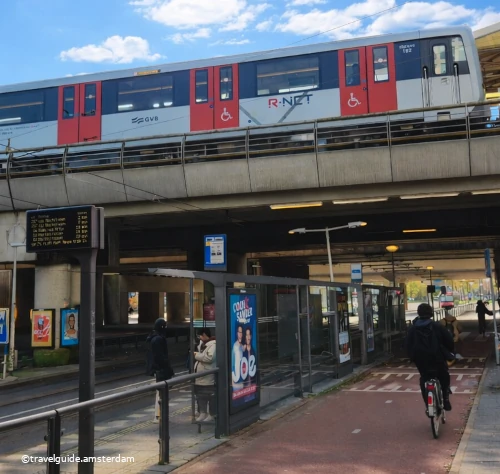
Bottom: tram – top: metro. Amsterdam’s public transport network is designed to allow convenient transfers between different modes of transport.
A few words about the history of the streetcar in Amsterdam

Amsterdam’s first horse streetcar was opened in 1875. Today, the city’s public transport company GVB operates the streetcar.
The history of streetcars in Amsterdam dates back to the 19th century, when the first horse-drawn streetcars were introduced in the city. The first electric streetcars were then put into operation at the beginning of the 20th century and played an important role in the city’s public transportation system.
Decline and revival
In the 1950s and 1960s, there was a decline in tram use as many people switched to cars. This led to a reduction in the streetcar network, but in the 1980s the city began to modernize and expand the streetcar infrastructure.
FAQ 2026
Is there a tram in Amsterdam?
Yes, Amsterdam has a well-developed tram network. The tram is a good way to discover the city. Thanks to many stops and lines you can reach many destinations. You can find more tips and information in our travel guide.
How much does a tram ticket cost in Amsterdam 2026?
Single journeys can be paid for with the “OV / E-Purse card”. It works in a similar way to a prepaid mobile phone card. You can load an amount of money onto this card at a machine. You can then use this credit to pay for local transport. A reloadable, anonymous e-purse card (without passport photo) costs 7.50 euros (without credit).
It is easier to use local transport with a day or multi-day ticket or OVpay.
I was just on a holiday and I forgot my backpack on your number 4 tram line, was just hoping if anyone may have turned it in? It is an all black Amazon backpack with a blue dell lab top ray ban sunglasses and a blue tooth selfie stick, if I was turned in I’d be ever so greatfull if it’s found! PEACE AND BLESSINGS!
Hello Gordon,
We’re sorry to hear that you had such a mishap while on vacation. Please contact the lost property office of the local public transport company GVB directly.
Good luck
What does one do for children who don’t have a smartphone?
Do they need a ticket?
What are the options if they can’t load a ticket to a phone?
Dear Tom,
Children aged 0–3 years can use public transport in Amsterdam free of charge.
There is a reduced day ticket for children between the ages of 4 and 11. It currently (2025) costs €5. There is no multi-day pass for children. If you need a children’s ticket for several days, the easiest way is to buy several one-day children’s tickets. Find more informations here
Just having access to this website is valuable in its self.
Dear David,
Thank you for your compliment. That motivates us to continue working on our website.